To Do What We Can
A mixtape built on instinct: My new favourite question, a piano metaphor from the Philippines, a yes-no-maybe calculator, moss, honeybees, and more questions.
Hi friend. There isn't really a theme this supermoon. Or maybe there is, and I cannot hold it in words of my own, so this collection was built on instinct. In these last months I have been moving out of burnout while still seeking paid work. I hear parts of me clearer than I did a year ago. Forming myself around the shape of the grief I grapple throughout has been a worthwhile study.
What can we do now in order to do tomorrow what we are unable to do today?
— Paulo Freire, 1994
A world without that person
People you love become part of you — not just metaphorically, but physically. You absorb people into your internal model of the world. Your brain refashions itself around the expectation of their presence. After the breakup with a lover, the death of a friend, or the loss of a parent, the sudden absence represents a major departure from homeostasis. As Kahlil Gibran put it in The Prophet, “And ever has it been that love knows not its own depth until the hour of separation.”
In this way, your brain is like the negative image of everyone you’ve come in contact with. Your lovers, friends, and parents fill in their expected shapes. Just like feeling the waves after you’ve departed the boat, or craving the drug when it’s absent, so your brain calls for the people in your life to be there. When someone moves away, rejects you, or dies, your brain struggles with its thwarted expectations. Slowly, through time, it has to readjust to a world without that person.
— David Eagleman, 2020
10 years ago
3 years ago
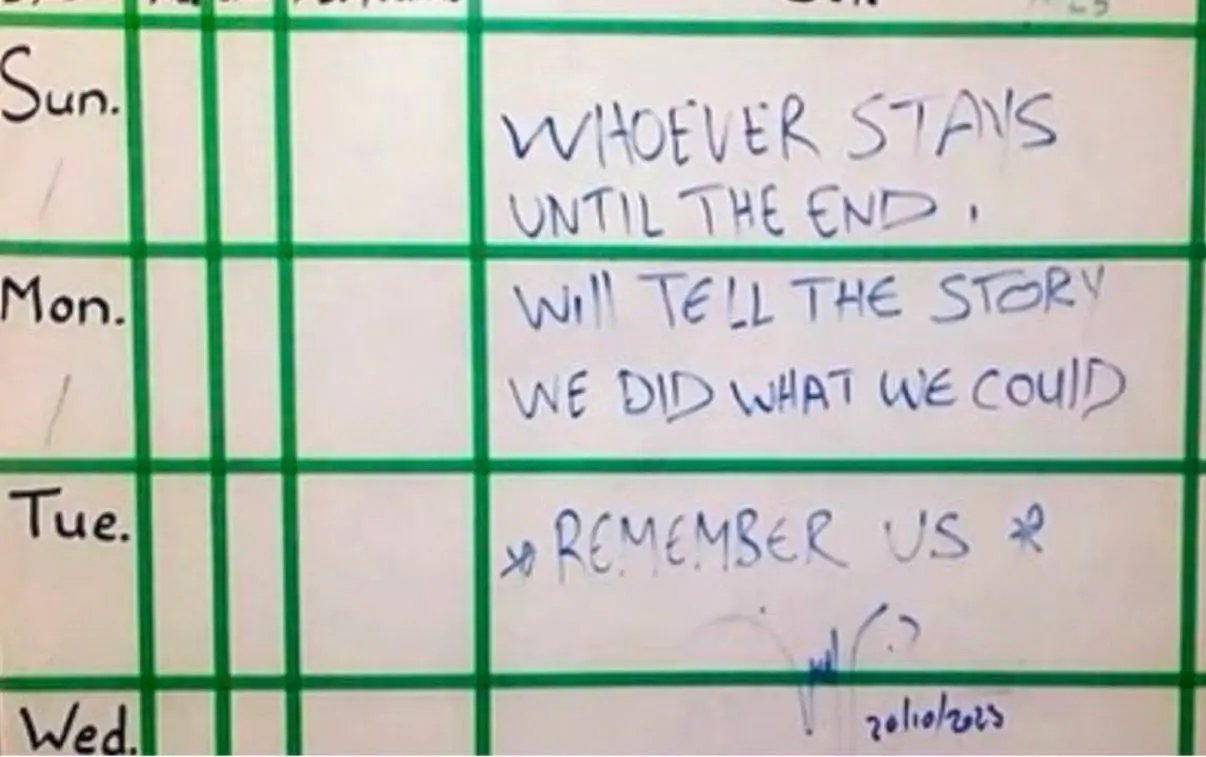
Honeybees
Honeybees make decisions collectively—and democratically. Every year, faced with the life-or-death problem of choosing and traveling to a new home, honeybees stake everything on a process that includes collective fact-finding, vigorous debate, and consensus building.
— Thomas Seeley, 2010
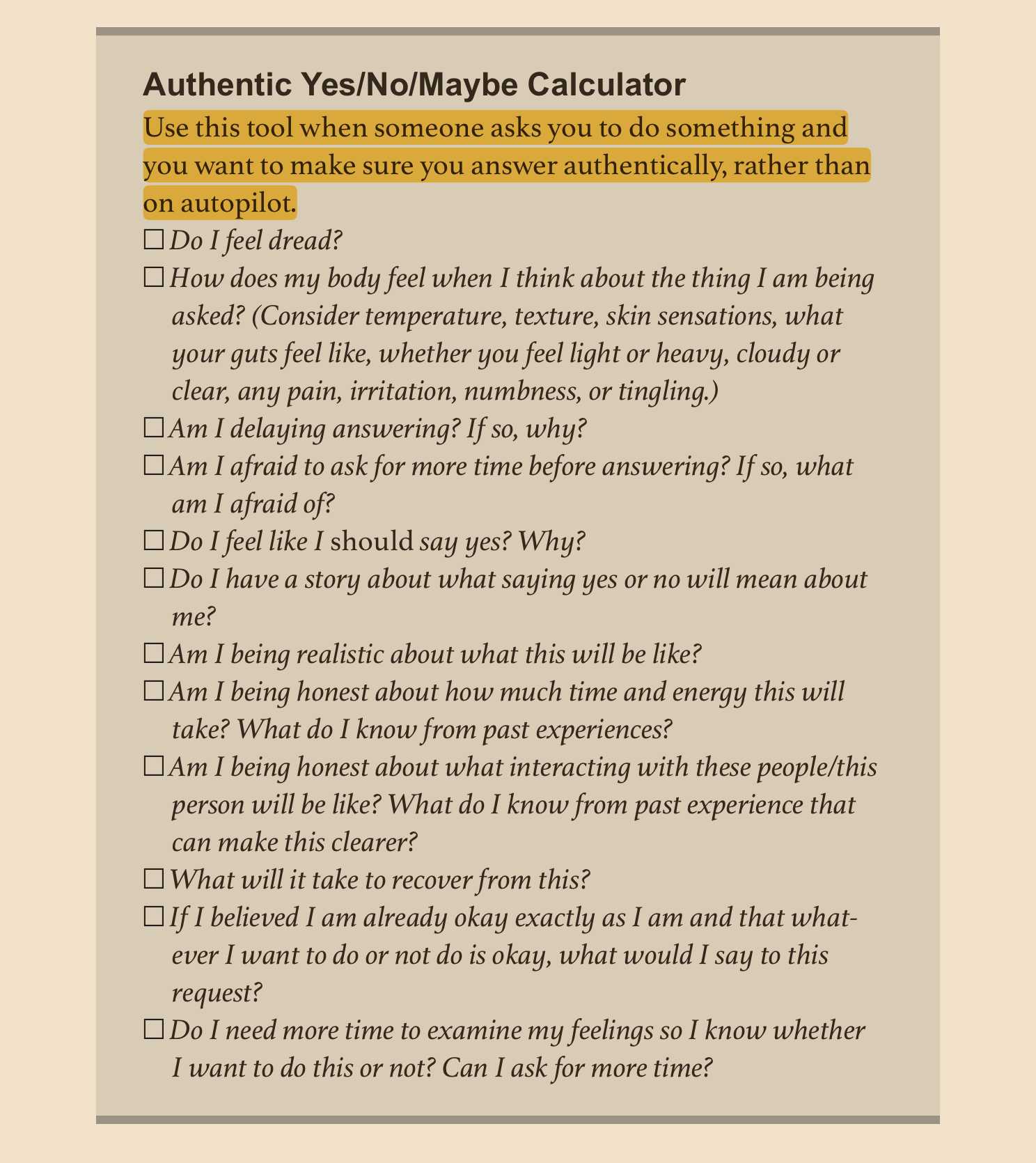
A Yes-No-Maybe Calculator
Save this to your phone for when someone asks you to do something and you want to answer sincerely instead of automatically.
The piano metaphor
We use ten fingers to play the piano. To make a good melody, these ten fingers don't just hit the keys but need to move with a clear pattern and coordination. It is not going to work if you use only some fingers while neglecting the others. The committee does not face just one task, but a myriad of tasks. But just like playing the piano, the committee needs to have proper form and coordination to face these various tasks in order to effectively implement them. To do this, the committee needs to handle its main function at a given time. This is important, for the main function is the one that directs proper direction to smaller tasks. In addition, we need to clearly determine priorities at any given time to work on things that need to be done first.
Problems may arise while we are in the process of doing these tasks. We cannot just ignore this. We need to determine the primary problem at any given time and try to solve it. Solving the primary problem will give way to properly resolving other smaller problems.This way, we can do our tasks smoothly and we can say we excel in "playing the piano."
— Araling Aktibista (2020)
Revolution is not something we just waltz into
I don’t only want to deal in fiction. When we think about what we want, we also have to think about how we will deal with the multiple threats to our lives. One tactic is a programme of coordinated obliteration, and then using the embers to reconstruct. The question is, what to do with this world and its institutions? Surely we cannot imagine a workable strategy that does not involve conflict, transitional periods, fear and days, maybe weeks, left cold before abundance arrives. Serious thinking means less abstract conjecture and more acting on instinct. Right now, do you know how you would fight back, if it came to that? Try standing in the mirror and asking yourself what you are prepared to do, who you will be prepared to protect. Do you know how to cover your tracks? We are sometimes going to need fewer words and more vehicles for sharing skills. We are going to need to teach each other how to make it through. Instruction of this kind allows us to save those who refused to prepare themselves. The task requires constant exercise (think, one of your five a day) of the will, but also knowing where you would go and what you would do if disaster struck. Right now, how many of us can say we have a plan that has factored in everybody? I am not imagining revolution as a disaster movie but I am trying to point out that we cannot just waltz into it; it is going to wind us. We need a plan. Maybe we send those who can fight to the office of the prime minister. Maybe we create a distraction and attack them right where it hurts and hope the ripple effects break nations, maybe we strike the heart.
— Lola Olufemi, 2021
The fear condition
Convincing people won’t be adequate. It’s necessary but it’s not adequate. All the education in the world is not going to defeat militarism or imperialism. It will open people's eyes to it— which is so necessary— but it won't defeat it. How do we minimise the harms of the state, which are many? Whether that is immigration enforcement, child apprehension, land theft, policing, on and on and on. The things we can do is defend each other and protect each other— what do we do together to minimize and try to break out of the condition of fear? Fear is one of the main barriers… How do you get to the stage when you are willing and able to do it with other people requires deep relational work, practice. It is not sitting and stewing in our heads whether we are brave enough— it’s actually trusting people that will have our backs. What are the conditions we can create together to allow ourselves to break through fear in order to become ungovernable? How do we stop being afraid of one another? How do we trust each other in incredibly scary times? And how do we build with each other so that we can be ungovernable when it comes to state violence?
— Harsha Walia, 2026
Experiences that show a different reality
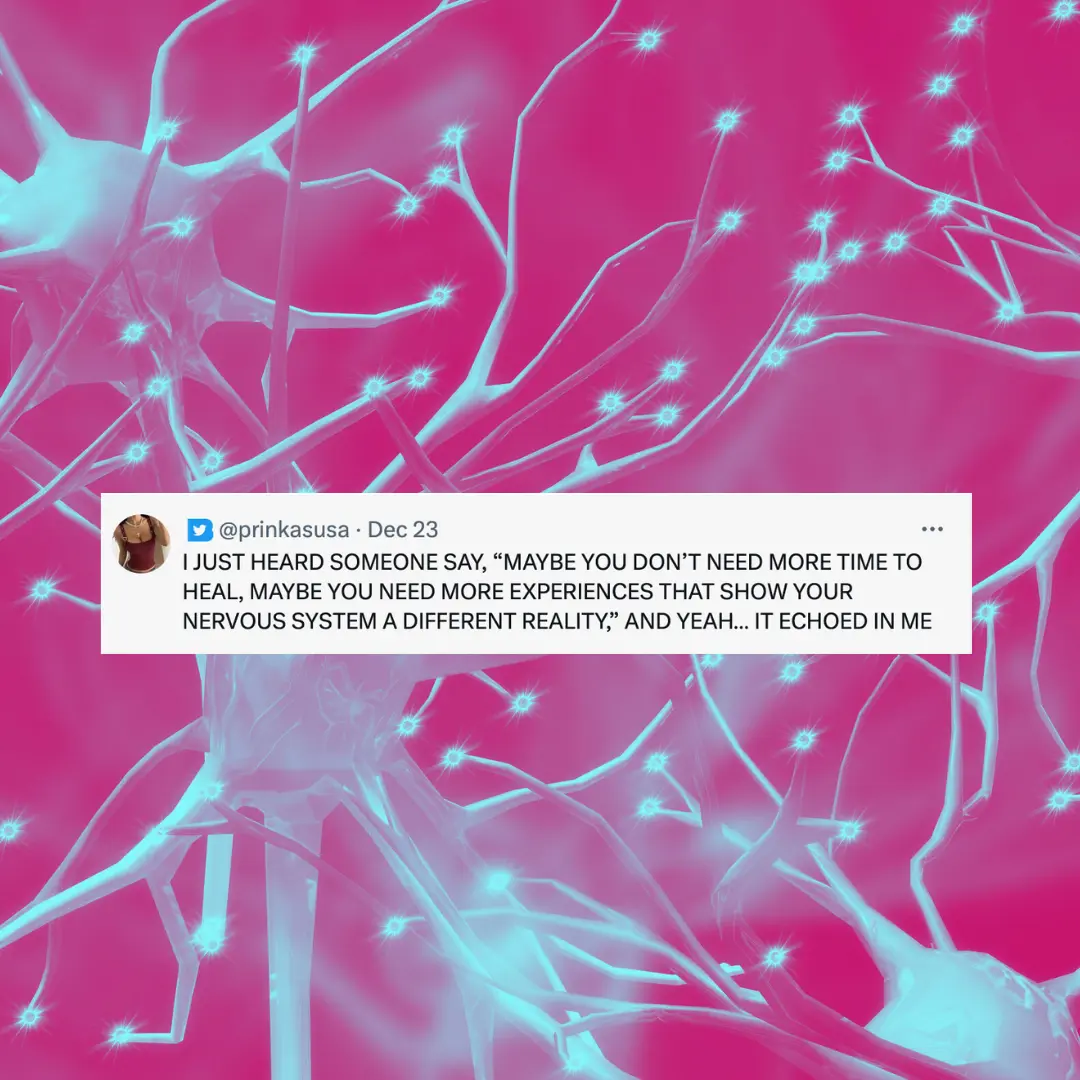
Agency is what heals your nervous system
Agency is what heals your nervous system. Not necessarily therapy, certainly not change of perspective, and not any simple idea about healing. Through agency, you bring yourself into a new life context that gradually allows you to integrate your knowledge from your past context into a new one. Healing and reorganizing, or rebuilding of your neural pathways, come along the way, but it takes enormous effort to move first and heal then. In a way, agency is what reorganizes your nervous system. Not by calming it down, not by reframing what happened, but by changing the structure of your life, by bringing you into a life context where you produce other types of thoughts and emotions, where your whole system gets the possibility to rebuild. And you have to move slowly and steadily towards another future, while still being traumatized by the past. You have to move silently and secretly, like a psychopath, and insistently, as if your life depends on it.
— Rebecka Sofia Ahvenniemi, 2026
Organising is both poison and remedy
If the idea that it would be possible to do away with the question of organisation arises from a misunderstanding of its double nature as pharmakon – at once poison and remedy, danger and enabling condition – the idea that it could be solved once and for all has a different mistake as its origin. [...] Organisation is not just a danger but an enabling condition: what gives each individual the possibility of expanding their limited capacity to act by pooling resources with others, constituting a collective capacity to act and extending its duration over time. To refuse organisation as such would be the same as rejecting that possibility, which makes no sense. Should it be circumscribed to a specific scale, however? Instead of posing this problem in the abstract, I subject it to the test of the most complex challenge facing political action today: the climate crisis. The prospect of global environmental catastrophe makes both building a single global collective force and hoping that the aggregate effects of countless local actions will eventually coalesce into a solution appear as equally far-fetched solutions. To tackle a problem of that magnitude and complexity, the most plausible alternative seems to be some kind of distributed action combining organisation at different levels and scales. To be sure, that alternative offers no absolute safeguards against the threat of potestas or guarantees of success; the question is whether we have any option but to run that sort of risk.
— Rodrigo Nunes, 2021
What moss can teach us
Moss teaches us to pay attention in a very different way from how we’re accustomed to seeing things in the attention economy. It inspires us to be more attuned to the systems that are larger than us, which we’re a part of, and to think in terms of reciprocal relationships that extend across timescales. For example:What would it mean to see myself as part of a community extending into the generations that came before me, and that will come after me? Moss lives collectively—there is no “individual” moss, which I find so anti-capitalist. It is home and host to many other communities of organisms and microbes. Also, moss is anti-death. Not only is it its own preservative agent, but you can bring dried moss back to life with a drop of water, hundreds of years after its supposed death, as long as fruiting bodies are present. It also reproduces both sexually and asexually, offering a queer lens through which we can see sexuality and reproduction in expansive, category-defying ways. Moss just doesn’t work very well within the boxes that we force it into, which is true of a lot of plants and fungi. Thinking outside of forced categorization can be a really helpful model for us, both in scholarly ways and in how we live with one another.
— Elaine Ayers, 2025
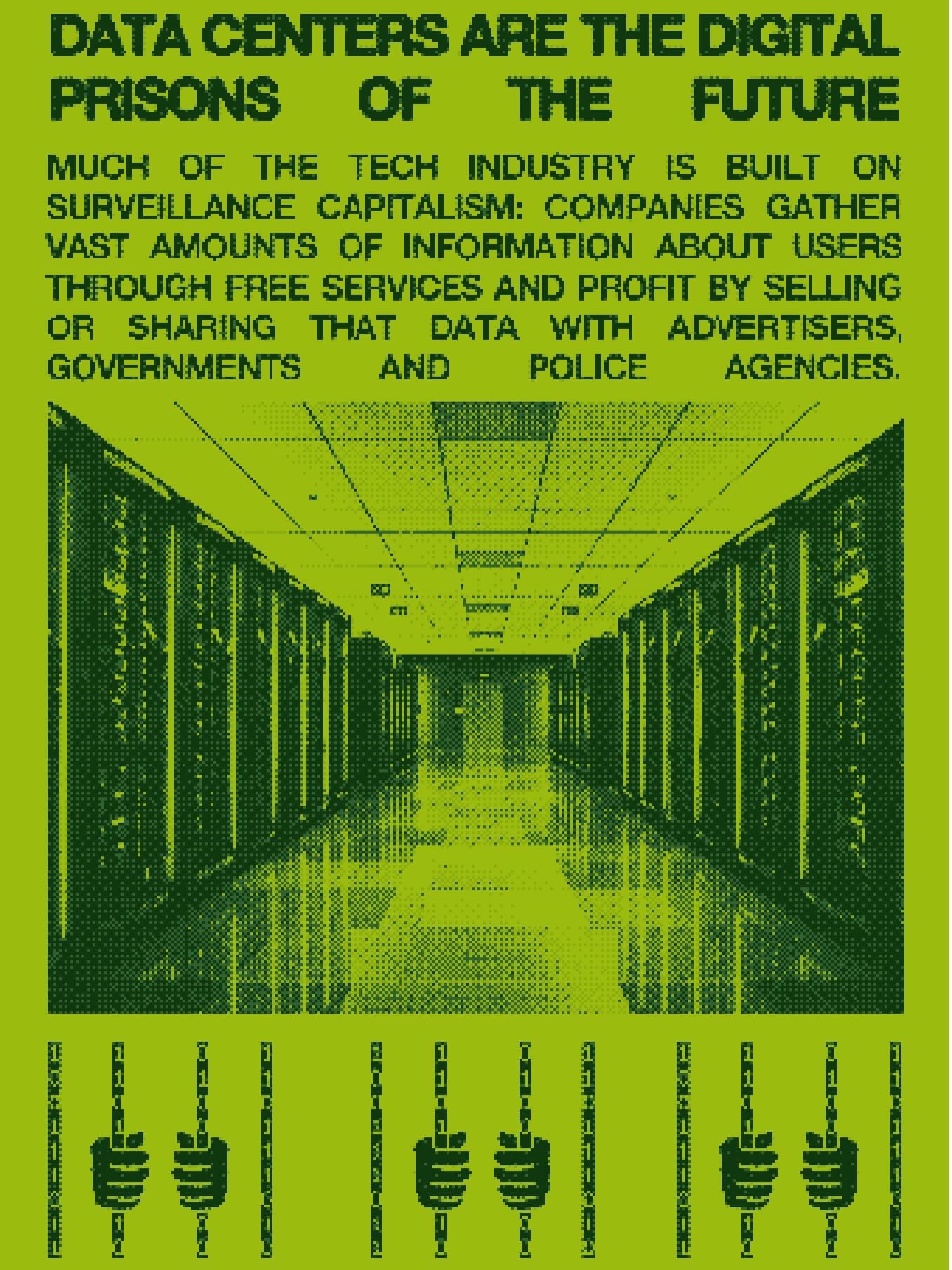
The digital prisons of the future
How do I want to be in these times?
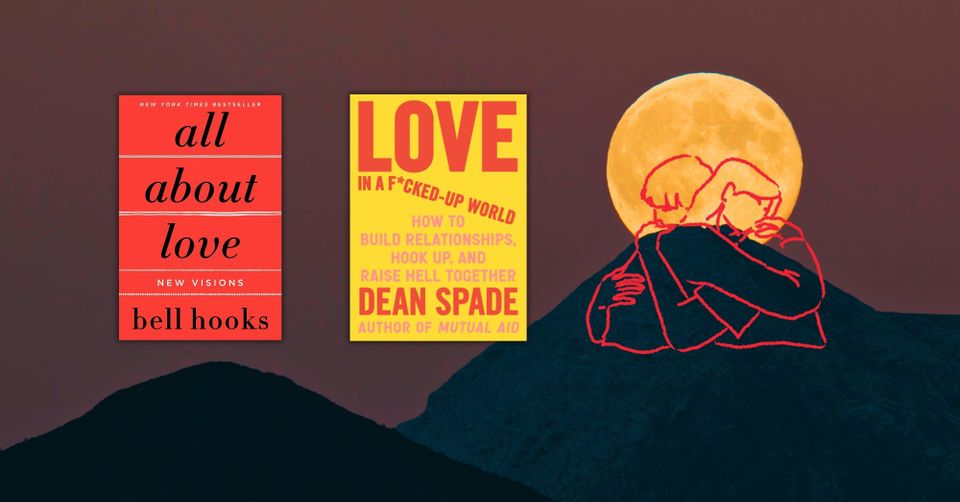
I ask myself: how do I want to be in these times? Again and again, the answer I come to is that I want to face up to these tragedies with an open and loving heart. I want to be part of collective efforts to care for others and stop as much destruction as possible. I want to appreciate every remaining moment of my life, even knowing that much is out of my control. I want to live according to my principles and priorities, not wasting time on nonsense I’ve been told is important. I want to be deeply connected to the people I love. I want to find more ways to care for strangers and create survival strategies that are collective and inclusive, not distrustful or insular. In the times to come, we are going to have to find ways to be with one another under enormous stress and in times of devastating grief. We will be called on to demonstrate capacities that are devalued and underdeveloped in dominant society: generosity, courage, connection, compassion, and imagination. I want us to be as awake to what is happening as possible, as capable as we can be to respond in ways that align with collective liberation. I want us to be able to relate to others with as much integrity and compassion as possible, responding to immediate conditions rather than being stuck in old cultural scripts or coping mechanisms that undermine effective action.
— Dean Spade, 2025
We only have our actions
Each person will only have what they endeavoured towards. Their striving will be seen, and then their work will be repaid in full. And the final goal is your Sustainer.
— God, The Star surah an-Najm, Qur'ān (53:39-42)
Inhuman conclusions about what life means
Every new generation reaches new conclusions on the questions that we all ask throughout our entire lives. My problem with my own generation’s answers to these questions is that I think they are algorithmically generated. We are reaching, I believe, inhuman conclusions on what human life means on both an individual and societal level. The machines don’t want to help you. They want you to keep looking.
— DJ Peach Cobbler, 2025
Go look at the moon, friend!
Liy